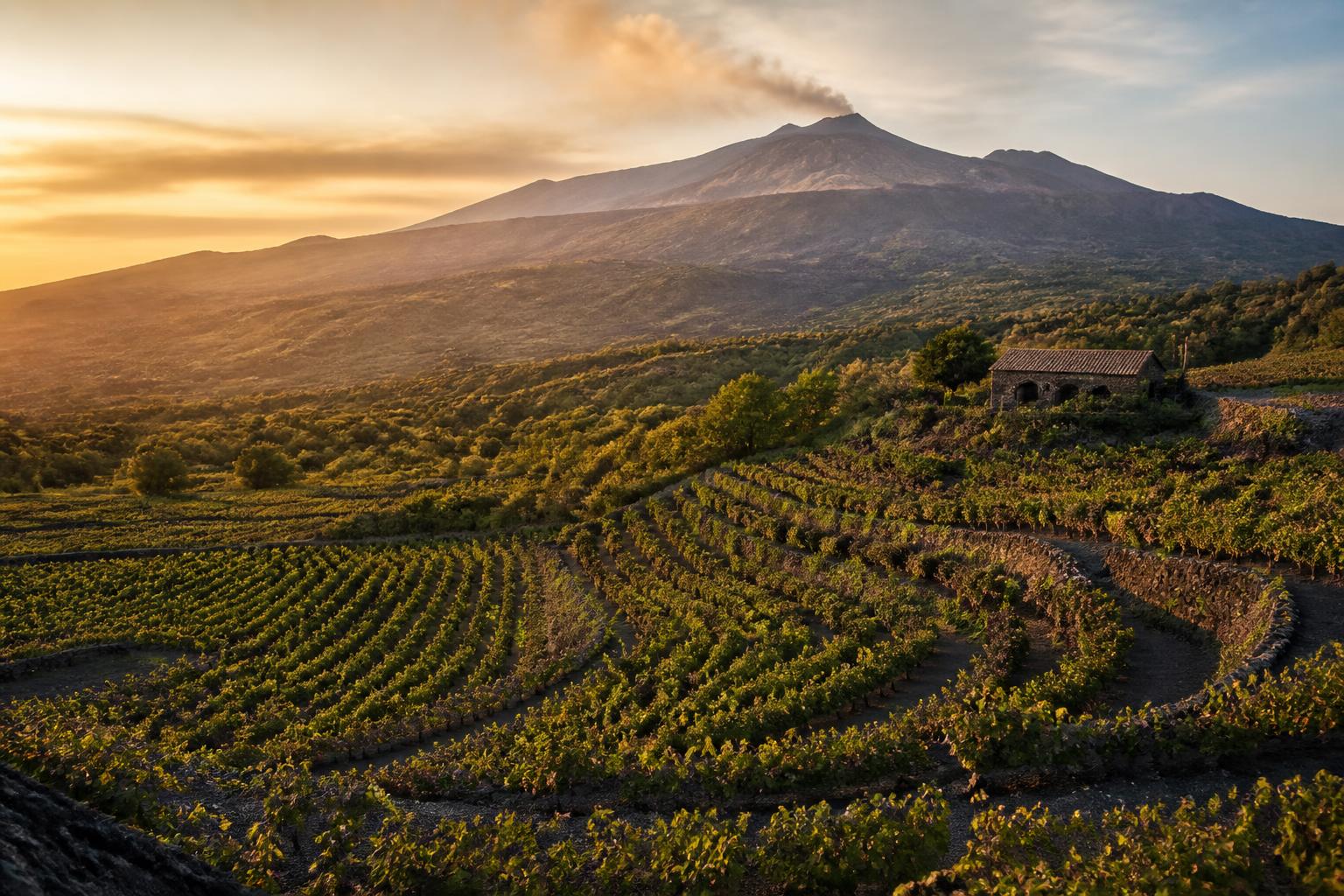
What Are the Contrade of Mount Etna?
Discover the contrade of Mount Etna: the unique volcanic vineyard districts that shape the character, style and identity of Etna DOC wines.
One of the most fascinating and unique features of Mount Etna's wine region is the system of contrade.
If you want to truly understand Etna wines, you cannot ignore them. They are the key to unlocking the incredible diversity and complexity of this volcanic terroir.
But what exactly is a contrada, and why does it matter so much?
What Does “Contrada” Mean?
In simple terms, a contrada is a small geographical vineyard area located on the slopes of Mount Etna.
However, unlike simple administrative divisions, contrade are defined by a combination of natural factors such as:
- Volcanic soil composition
- Lava flow history
- Altitude
- Exposure to sun and wind
- Microclimate conditions
- Age of vineyards
Each contrada represents a unique piece of the volcanic puzzle that is Mount Etna.
Why Are Contrade So Important?
The concept of contrade is often compared to the cru system in Burgundy, France.
Just like Burgundy, where small vineyard plots produce dramatically different wines, Etna's contrade can express completely different wine profiles even when the same grape variety is used.
This is because Mount Etna is a constantly evolving volcanic landscape, shaped by centuries of eruptions and lava flows.
As a result, no two contrade are exactly alike.
How Many Contrade Are There?
The Etna DOC region includes dozens of officially recognized contrade, and the number continues to evolve as winemakers and authorities refine classifications.
Some of the most well-known contrade include:
- Calderara Sottana
- Feudo di Mezzo
- Guardiola
- Solicchiata
- Santo Spirito
- San Lorenzo
- Contrada Porcaria
Each of these areas has its own personality and wine identity.
How Contrade Influence Wine Style
Even small differences in soil and altitude can dramatically affect the final wine.
For example:
Higher altitude contrade
- Fresher wines
- Higher acidity
- More elegance
- Slower ripening
Lower altitude contrade
- Riper fruit expression
- More structure
- Slightly warmer style
Younger lava flows
- More mineral tension
- Smoky, volcanic notes
- Linear and precise structure
Older soils
- Softer tannins
- More aromatic complexity
- Greater balance and depth
This diversity is what makes Etna one of the most exciting wine regions in the world.
Contrade and Labeling
Many top producers on Mount Etna proudly indicate the contrada on their wine labels.
This is not just a marketing choice-it is a declaration of identity.
By highlighting a specific contrada, winemakers are telling you exactly where the wine comes from, down to a very precise geographic origin.
This level of transparency is rare in the wine world and highly valued by collectors and sommeliers.
Contrade vs Single Vineyard Wines
Not all Etna wines mention a contrada, but when they do, it usually indicates:
- Higher quality production
- More limited selection
- Stronger terroir expression
- Greater aging potential
These wines are often considered the most authentic representation of Mount Etna.
The Role of Old Vines
Many contrade on Mount Etna are home to very old vines, some exceeding 80-120 years of age.
These ancient vineyards contribute:
- Lower yields
- Greater concentration
- More complex aromatics
- Better structure and balance
Old vines combined with volcanic soils create wines of extraordinary depth.
Why Wine Lovers Are Fascinated by Contrade
Wine enthusiasts are increasingly drawn to Etna because of its extreme terroir diversity.
The contrade system offers:
- Endless variation within a small region
- A strong sense of place
- Authentic, non-industrial winemaking
- A “discovery experience” with every bottle
This makes tasting Etna wines feel like exploring a living geological map.
Visiting the Contrade
One of the most rewarding experiences for visitors is actually walking through these vineyard areas.
On an Etna wine tour, you can:
- See ancient lava flows shaping vineyards
- Compare different contrade side by side
- Meet winemakers working specific plots
- Taste wines directly from their origin
- Understand how volcano and wine interact
It transforms wine tasting into a full sensory journey.
Final Thoughts
The contrade of Mount Etna are not just vineyard areas-they are the DNA of Etna wines.
Each contrada tells a different story shaped by lava, altitude, wind, and centuries of human cultivation.
Understanding them is essential for anyone who wants to truly appreciate the depth and complexity of Etna wines.
Once you discover the contrade, every glass of Etna wine becomes a map of the volcano itself.
Frequently Asked Questions
What is a contrada on Mount Etna?
A contrada is a small, named vineyard district on Mount Etna defined by volcanic soil composition, lava flow history, altitude, exposure, microclimate and the age of its vineyards.
How many contrade are there on Mount Etna?
The Etna DOC region includes dozens of officially recognized contrade, and the number continues to evolve as winemakers and authorities refine classifications.
Why are Etna contrade compared to Burgundy crus?
Because each contrada can produce distinctly different wines from the same grape variety, reflecting precise terroir differences similar to Burgundy's cru system.
What are some famous contrade on Mount Etna?
Well-known contrade include Calderara Sottana, Feudo di Mezzo, Guardiola, Solicchiata, Santo Spirito, San Lorenzo and Contrada Porcaria.
How do contrade influence the taste of Etna wines?
Altitude, lava-flow age, soil composition and exposure create differences in acidity, fruit ripeness, minerality, structure and aromatic complexity.