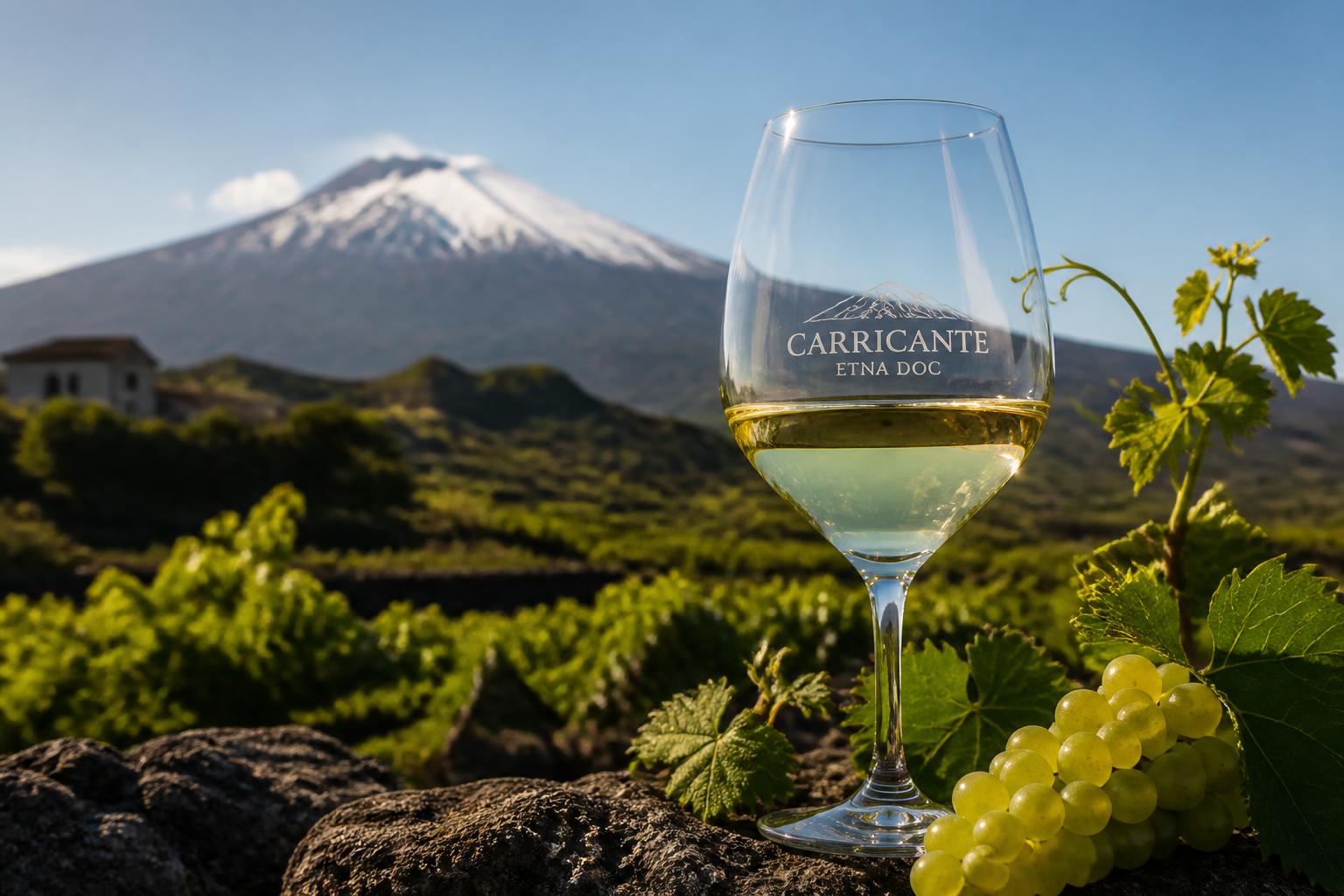
Carricante: The Great Volcanic White Wine of Mount Etna
Discover why Carricante is the queen of Etna's white wines, how the Milo terroir shapes its crystalline minerality, and what makes it one of Italy's most age-worthy whites.
If Nerello Mascalese is the king of Etna's red wines, then Carricante is undoubtedly the queen of its whites.
This ancient native grape variety, grown exclusively on the slopes of Mount Etna, produces some of the most refined, mineral-driven, and age-worthy white wines in Italy.
In recent years, Carricante has gained growing international attention, becoming a favorite among sommeliers and wine lovers looking for something truly distinctive.
But what makes Carricante so special?
The Origins of Carricante
Carricante is a historic Sicilian grape variety, cultivated for centuries on the eastern slopes of Mount Etna, particularly in the Milo area, which is considered its most prestigious growing zone.
The name is believed to come from the Italian word caricare (to load), possibly referring to the vine's traditional high yields in the past.
Today, however, yields are carefully controlled to prioritize quality over quantity, resulting in wines of remarkable precision and elegance.
Why Carricante Thrives on Mount Etna
Carricante finds its ideal expression in the unique volcanic environment of Etna.
Vineyards are often located at high altitudes, sometimes reaching up to 1,000 meters (3,300 feet) above sea level, where cool temperatures shape a very slow and balanced ripening process.
Key growing conditions include:
- Volcanic soils rich in minerals and ash
- Strong day-to-night temperature variations
- Constant mountain breezes
- High-altitude vineyards
- Long growing season
These factors contribute to wines with exceptional freshness, acidity, and aging potential.
What Does Carricante Taste Like?
Carricante produces white wines that are often described as crystalline, precise, and deeply mineral.
Unlike many Mediterranean whites, it is not heavy or overly fruity. Instead, it focuses on tension, structure, and elegance.
Typical tasting notes include:
- Lemon and citrus zest
- Green apple
- White peach
- Orange blossom
- Mediterranean herbs
- Flint and volcanic minerality
With age, Carricante develops additional complexity, including:
- Honeyed notes
- Petrol-like nuances
- Almond
- Wet stone and smoky tones
This evolution makes it one of Italy's most age-worthy white wines.
The Role of Milo: Carricante's Most Famous Zone
The area of Milo, on the eastern slope of Mount Etna, is considered the most prestigious terroir for Carricante.
It is the only zone within the Etna DOC where white wines can receive the designation Etna Bianco Superiore DOC, highlighting its exceptional quality potential.
Thanks to higher rainfall and cooler temperatures, wines from Milo tend to be:
- More structured
- More aromatic
- Longer-lived
- More complex
For many experts, Milo represents the pinnacle expression of Carricante.
Carricante vs Other Italian White Wines
Carricante is often compared to other great Italian white wines, but it stands apart for its volcanic identity.
Compared to Pinot Grigio, it is:
- More structured
- More acidic
- More mineral-driven
Compared to Vermentino, it is:
- Less fruity
- More vertical and precise
- More age-worthy
Compared to Fiano or Greco, it is:
- More saline and volcanic
- More linear in style
- More focused on tension than richness
This makes Carricante one of the most distinctive white wines in Italy.
Aging Potential
One of Carricante's most surprising qualities is its ability to age.
While many white wines are meant to be consumed young, high-quality Carricante can evolve beautifully over:
- 5-10 years
- 10-15 years for top selections
Over time, it gains complexity while maintaining its signature freshness and minerality.
Food Pairing with Carricante
Carricante's high acidity and mineral profile make it extremely versatile at the table.
It pairs beautifully with:
- Fresh seafood and oysters
- Grilled fish
- Shellfish
- Sushi and sashimi
- Light pasta dishes
- Fresh cheeses
- Vegetable-based Mediterranean cuisine
It is especially exceptional with seafood dishes typical of Sicilian cuisine.
Why Carricante Is Becoming Famous Worldwide
In recent years, Carricante has attracted growing international attention thanks to:
- The rise of volcanic wines
- Increasing demand for high-acid white wines
- Unique terroir expression
- Limited production
- Strong identity linked to Mount Etna
Top wine critics now consider it one of the most exciting white grape varieties in Southern Europe.
Where to Taste Carricante on Mount Etna
The best way to understand Carricante is to taste it directly in its natural environment.
Visiting Etna wineries allows you to:
- Walk through high-altitude vineyards
- Learn about volcanic soil influence
- Compare different Etna Bianco expressions
- Taste Etna Bianco Superiore from Milo
- Experience wine with views of the volcano and the sea
It is an unforgettable experience that combines nature, culture, and wine in one journey.
Final Thoughts
Carricante is much more than a white grape variety. It is the pure expression of Mount Etna's volcanic landscape in a glass.
Precise, elegant, and incredibly age-worthy, it represents one of Italy's most distinctive and promising white wines.
For anyone exploring Etna wines, discovering Carricante is essential-it reveals the fresh, vertical, and mineral soul of this extraordinary volcanic terroir.
Frequently Asked Questions
What is Carricante?
Carricante is a historic white grape native to Mount Etna, Sicily. It is the main grape used in Etna Bianco and Etna Bianco Superiore DOC wines.
Where is the best Carricante grown?
The Milo area on Etna's eastern slope is considered Carricante's most prestigious terroir and the only source of Etna Bianco Superiore DOC.
What does Carricante taste like?
Carricante offers crystalline citrus, green apple, white peach, orange blossom, Mediterranean herbs and volcanic minerality. Aged wines develop honey, almond, petrol and smoky notes.
Is Carricante age-worthy?
Yes, high-quality Carricante can evolve beautifully for 5 to 15 years, gaining complexity while retaining its signature freshness and minerality.
What food pairs with Carricante?
Its high acidity and saline profile make it ideal with seafood, oysters, grilled fish, shellfish, sushi, light pasta, fresh cheeses and vegetable-based Mediterranean dishes.